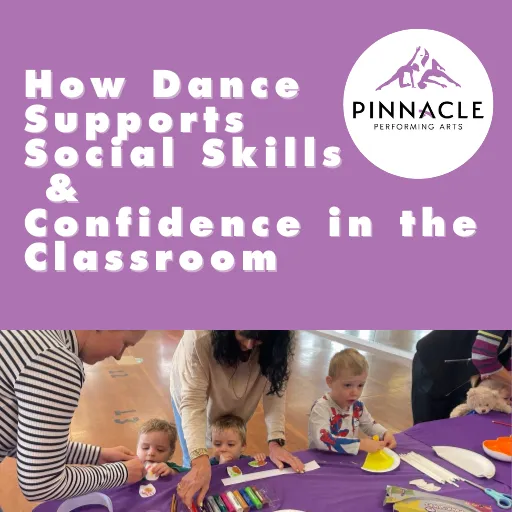
How Dance Supports Social Skills & Confidence in the Classroom
How Dance Supports Social Skills & Confidence in the Classroom
Social skills are an essential part of a child’s development, particularly as they prepare to begin school. Children who feel confident interacting with others and participating in group environments often find the transition to the classroom much smoother.
Dance classes offer a unique and engaging way for children to build these important skills before they even step into a school environment.
At Pinnacle Performing Arts in Toowoomba, we see every week how dance helps children develop confidence, communication skills, and positive social behaviours that support their success both inside and outside the classroom.
Fostering Teamwork and Cooperation
One of the most valuable social benefits of dance is the opportunity to work as part of a team.
In dance classes, children regularly learn alongside others through different exercises, participate in partner activities, and share space within the studio. These experiences encourage children to:
• listen to others
• respect personal boundaries
• take turns
• work together toward a shared goal
These skills mirror the same behaviours children need when they begin school. Whether they are working on a group project, participating in class discussions, or learning alongside their peers, teamwork and cooperation play a vital role in classroom success.
Through dance, children experience first-hand what it means to contribute to a group and support others.
Developing Listening Skills and Following Instructions
Dance classes also help children strengthen their listening and focus.
During class, students follow instructions from their teacher, respond to cues, and learn sequences of movements. This process naturally encourages children to practise paying attention, remembering directions, and responding to guidance.
These skills are directly transferable to the classroom environment.
Children who have practised listening and following structured instructions in dance classes often find it easier to follow classroom routines, understand directions from their teacher, and participate confidently in group activities.
As early childhood educator Dr. Carla Horwitz explains:
“Listening skills are foundational for school success. Dance provides an environment where children can practise listening while engaging in physical activity.”
Building Confidence and Self-Esteem
Confidence develops through small moments of success.
In dance classes, children regularly experience these moments as they learn new movements, master routines, and see their progress over time. Each achievement reinforces a sense of capability and pride.
Dance also provides a supportive environment where children are encouraged to try new things, make mistakes, and improve through practice.
For many students, performing in front of others—whether for their classmates or at a studio concert—is a powerful confidence-building experience. These opportunities help children become more comfortable expressing themselves and participating in front of others.
This increased self-assurance often carries over into the classroom, where children feel more confident raising their hand, sharing ideas, and engaging with their peers.
The Power of Positive Reinforcement
Encouragement plays an important role in building social confidence.
In dance classes, students regularly receive positive feedback from teachers and peers as they progress. Praise for effort, improvement, and participation helps children feel recognised and supported.
This consistent encouragement reinforces positive behaviours and helps children develop a healthy sense of self-belief.
Children who feel supported and valued are often more willing to participate in classroom activities and interact confidently with others.
Supporting Emotional Regulation
Dance also helps children develop emotional awareness and regulation.
Young children are still learning how to manage feelings such as excitement, frustration, or nervousness. Dance classes provide a structured environment where they can experience these emotions while learning how to respond appropriately.
Whether working through the challenge of mastering a new movement or feeling proud after completing a routine, children learn how to manage their reactions and remain focused.
These emotional regulation skills are incredibly valuable in the classroom, where children encounter new challenges and social situations every day.
Preparing Children for a Successful Start at School
Dance is much more than an extracurricular activity. It provides children with opportunities to develop essential life skills that support their transition into school.
Through dance classes, children learn to:
• interact positively with others
• follow instructions and routines
• build confidence in group settings
• manage emotions in social environments
These experiences help children feel more prepared and comfortable when entering the classroom.
Discover Kids Dance Classes in Toowoomba
At Pinnacle Performing Arts, our dance programs are designed to support the whole child—not just their dance technique.
Our classes help children develop confidence, coordination, social skills, and a love of movement in a welcoming and supportive environment.
If you are looking for kids dance classes in Toowoomba that support your child’s development and school readiness, we would love to welcome your family to our studio.
Explore our programs or book a trial class today.